A Time For Change - The IETM Pre-Meet That Left Me Thinking!
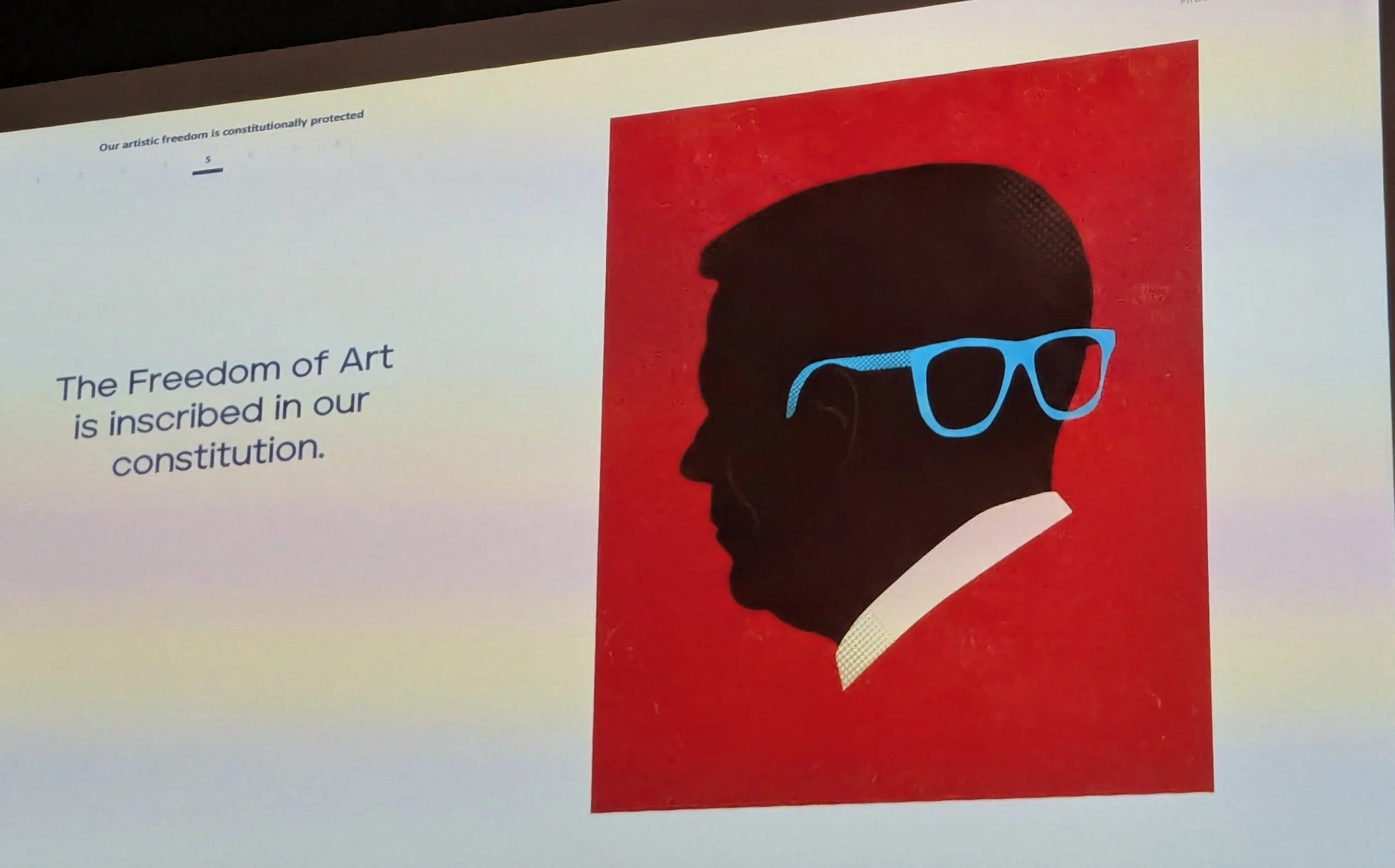
The first slide in our host's presentation read: "Our artistic freedom is constitutionally protected." The second: "Finland has one of the densest theatre networks per capita." I was impressed and intrigued — tell me more.
I arrived in Helsinki in June 26 to join the IETM plenary pre-meet, held in Espoo, Finland's second-largest city. We were hosted by & Espoo Theatre, Finland's international theatre, and Culture Espoo. & develops its own national and international co-productions and brings together guest performances from Finland and around the world. As they put it in their strategy, "Our mission is to support people in their pursuit of a good life through the performing arts." Sounds good to me!
The pre-meet brought together around 30 performance practitioners from Europe to Palestine, as well as from further afield, Canada, India, and Australia, to dig deeper into the problem of self-censorship within the artistic community and to ask ourselves: why aren't we, as artists, louder when the world is burning?
Over two days, we heard from the team about their extensive programme of theatre and local engagement and the ambition they have for their work in the future. But we also heard about challenges they face: funding cuts in Finland and the rise of the far right, the impact of the war in Ukraine, and the pressure of being a border country to Russia.
We took a boat to explore the archipelago, and while sailing, heard from Finnish artists about their current projects, a wonderful way to really listen, we all agreed.
The weekend culminated in a fascinating panel discussion, Why Do We Shut Up? — on self-censorship in the arts and the mechanisms of keeping quiet - hosted by EMMA (Espoo Museum of Modern Art). There, partners from Finland reflected on how public funding had, so far, protected them from censorship and the pressures of capitalism and corruption — but how, with far-right movements taking up more space in the political and cultural arenas, artists across the Nordic countries can no longer be so sure of that freedom. Even where authorities aren't directly censoring content, there's a growing tendency among leaders of arts organisations to stay quiet and hold back, careful not to provoke anyone or break the apparent consensus.
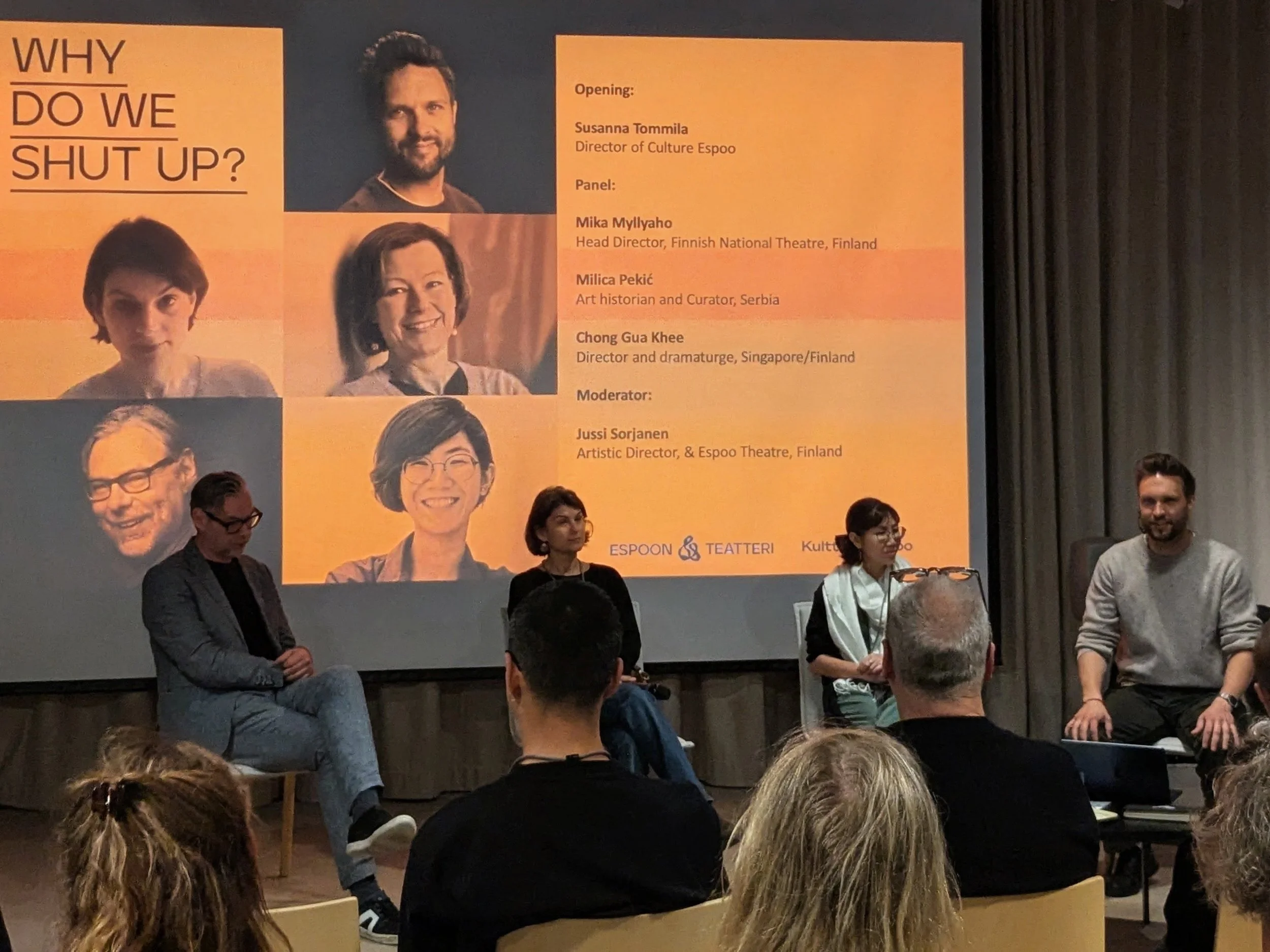
Mika Myllyaho, Director of the Finnish National Theatre, gave us a direct example of that caution in action, after he was the first person in a position of Arts leadership in Finland to declare, "We call for an immediate ceasefire in Gaza," and how he and his staff faced repercussions unlike anything they'd experienced before. Then Milica Pekić, an art historian and curator from Belgrade, gave us the opposite example — speaking about the incredible student-led strikes and movement in Serbia, and the huge impact they've had on the country's fight for democracy and change. It's a reminder that speaking out, self-organising, and collective authorship are often the only conditions under which real change happens.
She reminded us that what they're experiencing could — and will or even, is already happening here too. The cuts to Arts and Culture we're seeing now are just the start, if we don't act and work together, not in isolation but as a community!
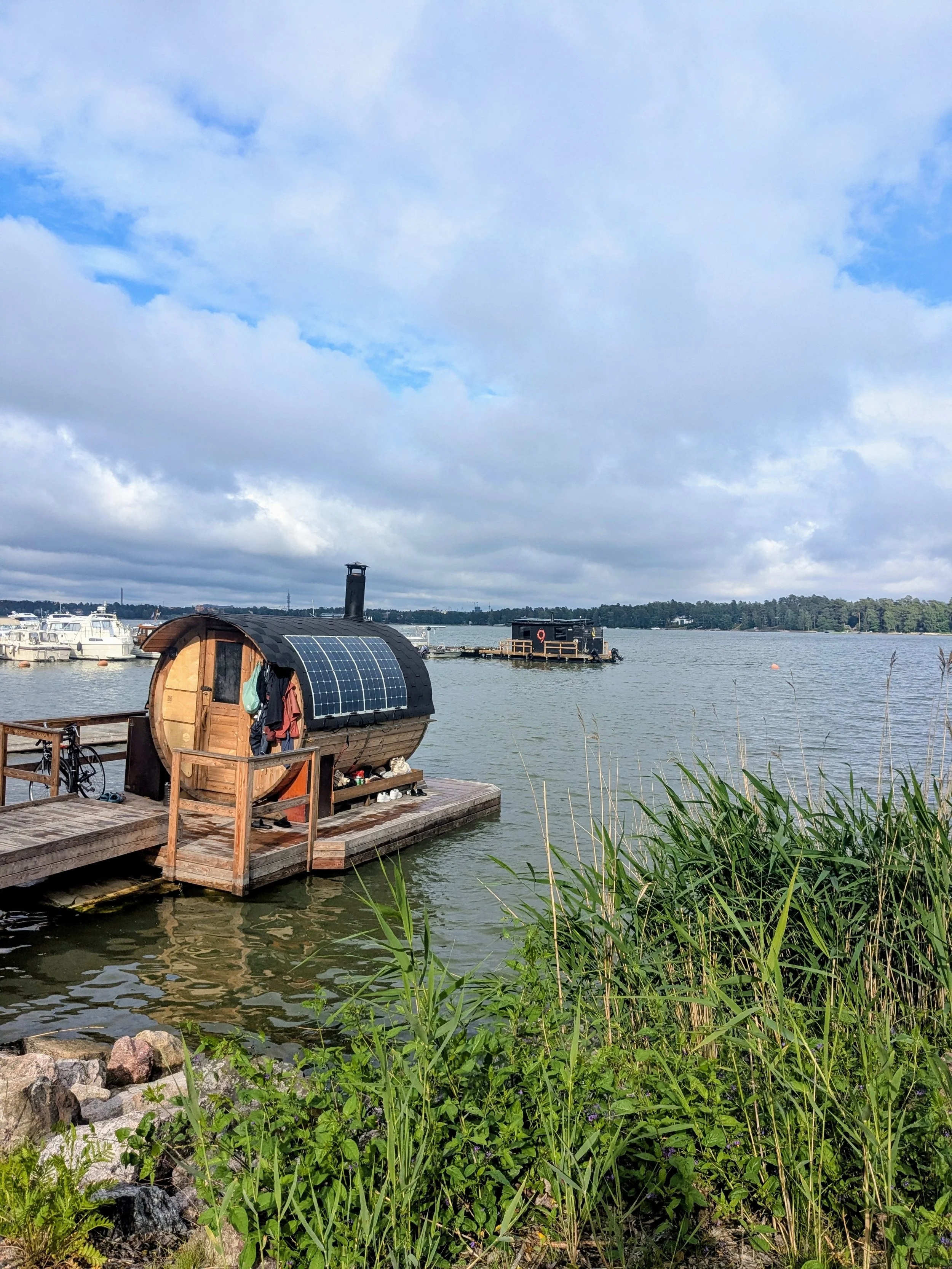
We then unpacked this conversation, and everything else we'd learnt from our time together, in the institution that is the sauna. Saunas have a very important place in Finnish culture, not only for health and community, but also as an egalitarian space for discussing and building trust in international relations. "Sauna diplomacy" is a tradition in which the Finnish government has tested policy ideas and hosted allies and rivals alike, helping to defuse tension.
If you're interested in this, have a read here.
Following this brilliant weekend, we took a five-hour train journey to Oulu, in the north of Finland, where we joined a workshop, led by the ever-inspiring Pippa Bailey: Network, Learn and Rehearse a Sustainable Future, drawing on her own slow-travel journeys and work around collectively imagining and rehearsing brave sustainable futures. We then joined the main plenary meeting for further insightful discussions and workshops — but that's for another day!
Coming home, what's stayed with me isn't just the archipelago or the sauna or even the workshop on the train, as thought provoking as they all were — it's the discomfort of that question we kept circling: why aren't we louder? It's easy to hear about censorship on artists and culture somewhere else and feel removed from it. And Milica's warning stuck with me — that quiet, that caution, that instinct not to provoke anyone, isn't just a Finnish problem. It's ours too.
This is where I think the arts in the west are having to sit in all this — not usually facing censorship head-on, but absorbing it quietly instead. I think political work often gets softened when it's too direct, renamed "socially engaged" or "community participation" so it's easier to fund, easier to sit with. But it's not any less political for being renamed. This is exactly what Milica meant when she said it's not only a Finnish problem. This quieter, cushioned kind of censorship is already happening here too and can easily escalate very quickly.
Finland's public funding and constitution has long protected artists in ways ours can't dream of but even that protection is starting to crack, with funding cuts arriving alongside a rise in the far right. And we don't need to wait and see if that happens in England— it already is.
The cuts are apparent here, and with them, the same slow loss: not of funding alone, but of the arts' autonomy. The less room there is for artists to set their own terms, the more the arts get pulled into serving someone else's — instrumentalised, used, but no longer able to challenge much of anything.
It's a complex issue but what might push back against this I think, is something closer to what that weekend actually gave us: time spent together, slowing down enough to really listen to each other — and to be willing to sit with a hard question instead of rushing past it. That feels like the start of something worth building here too.